
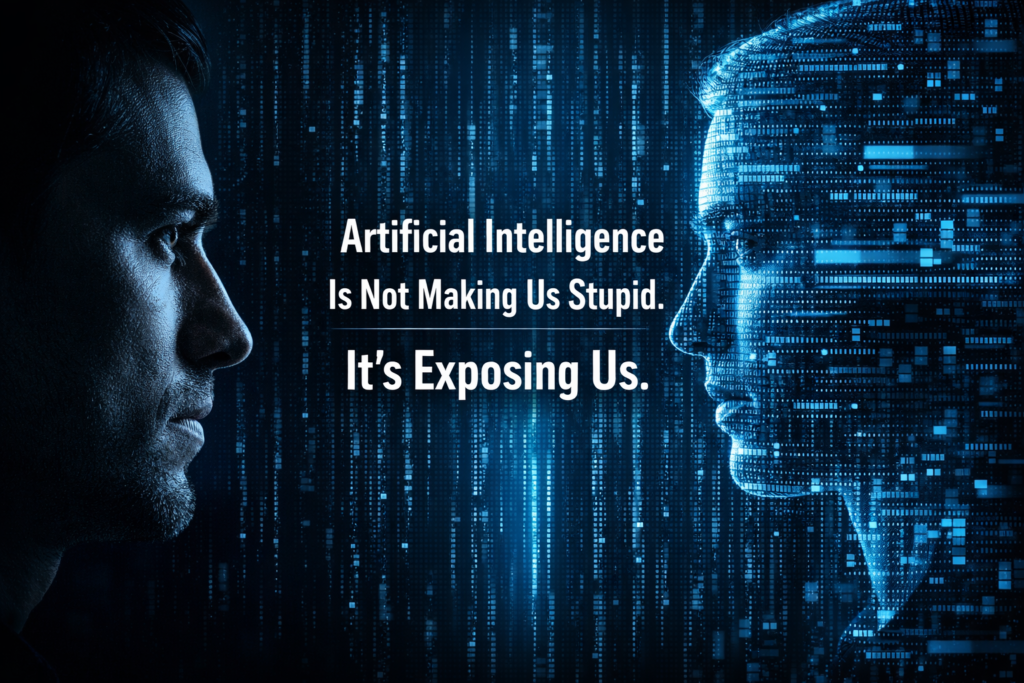
Τις τελευταίες ημέρες, ολοένα και περισσότερα άρθρα παρουσιάζουν την τεχνητή νοημοσύνη ως ένα είδος μεταφυσικής απειλής — μια δύναμη που εισχωρεί αθόρυβα στο ανθρώπινο μυαλό, το ισοπεδώνει, το ομογενοποιεί και τελικά το μετατρέπει σε μια μηχανή που αναπαράγει έτοιμες απαντήσεις. Πρόκειται για μια βολική αφήγηση: βασισμένη στον φόβο, εντυπωσιοθηρική και εύκολη. Ακριβώς γι’ αυτόν τον λόγο, είναι και παραπλανητική.
Η πρώτη και πιο θεμελιώδης παρανόηση είναι η ιδέα ότι τα γλωσσικά μοντέλα διαθέτουν έναν εσωτερικό άξονα σκέψης — μια σταθερή, αυτόνομη οπτική την οποία προσπαθούν ενεργά να επιβάλουν στους χρήστες. Όποιος έχει έστω και μια βασική κατανόηση του τρόπου λειτουργίας αυτών των συστημάτων μπορεί να αναγνωρίσει ότι αυτό δεν ισχύει. Τα γλωσσικά μοντέλα δεν λειτουργούν ως ανεξάρτητες συνειδήσεις με σταθερές πεποιθήσεις ή ιδεολογικές ατζέντες. Λειτουργούν κυρίως ως συστήματα που επεξεργάζονται, οργανώνουν και ανασυνθέτουν πληροφορίες με βάση την είσοδο του χρήστη, μέσα στα όρια της εκπαίδευσης και του σχεδιασμού τους.
Αυτό γίνεται άμεσα εμφανές μέσα από μια απλή παρατήρηση. Αν ένας χρήστης ζητήσει από ένα γλωσσικό μοντέλο να δικαιολογήσει μια πράξη, το μοντέλο θα παράγει ένα σύνολο επιχειρημάτων που μπορούν λογικά να τη στηρίξουν. Αν ο ίδιος χρήστης ζητήσει το αντίθετο, το μοντέλο θα αναδείξει με την ίδια ευκολία τα προβλήματα, τις αντιφάσεις και τις συνέπειες αυτής της πράξης. Αυτό δεν είναι ασυνέπεια. Είναι ο βασικός μηχανισμός λειτουργίας του. Τα συστήματα αυτά δεν παράγουν λογική από το μηδέν, ούτε δημιουργούν αλήθεια ως μια εσωτερική, αυτογενή δύναμη. Ανασυνθέτουν λογικές διαδρομές με βάση την κατεύθυνση, το πλαίσιο και την πρόθεση του ερωτήματος.
Υπό αυτή την έννοια, τα γλωσσικά μοντέλα δεν κατεβαίνουν από το βουνό κουβαλώντας αλήθειες. Τις περισσότερες φορές αντανακλούν τη δομή, τη σαφήνεια, την πρόθεση και το βάθος — ή την έλλειψή τους — του ανθρώπου που τα χρησιμοποιεί.
Αυτό οδηγεί σε ένα άβολο αλλά αναγκαίο συμπέρασμα: όταν η αλληλεπίδραση με την τεχνητή νοημοσύνη παράγει ρηχή σκέψη, κλισέ, φουσκωμένη γλώσσα ή μια επίφαση σοφίας, το πρόβλημα δεν προέρχεται από τη μηχανή. Προέρχεται από την ανθρώπινη είσοδο, την ανθρώπινη πρόθεση και τη γενικότερη πνευματική κατάσταση του χρήστη.
Η τεχνητή νοημοσύνη δεν δημιουργεί τη φτώχεια της ανθρώπινης σκέψης. Την αποκαλύπτει, την οργανώνει και, σε πολλές περιπτώσεις, την επιταχύνει.
Ωστόσο, αυτή είναι μόνο η μία πλευρά της εικόνας. Η άλλη πλευρά — που συχνά αγνοείται — είναι εξίσου σημαντική. Ζούμε σε έναν κόσμο όπου ο λειτουργικός αναλφαβητισμός παραμένει σημαντικός, ακόμη και στις ανεπτυγμένες κοινωνίες. Πολλοί άνθρωποι δυσκολεύονται να δομήσουν τη σκέψη τους, να διατυπώσουν ιδέες, να γράψουν με σαφήνεια ή να υπερασπιστούν ένα επιχείρημα χωρίς γλωσσικές αστοχίες. Για αυτούς τους ανθρώπους, η τεχνητή νοημοσύνη δεν αποτελεί απαραίτητα εργαλείο πνευματικής παρακμής. Μπορεί να λειτουργήσει ως γέφυρα προς μια πιο οργανωμένη έκφραση.
Αυτό είναι ένα σημείο που σπάνια συζητείται με ειλικρίνεια. Αν κάποιος που μέχρι χθες έγραφε αποσπασματικά, ασαφώς ή με συχνά λάθη αρχίζει — με τη βοήθεια της τεχνητής νοημοσύνης — να κατανοεί τη δομή, να βελτιώνει τη γραμματική του, να οργανώνει καλύτερα τις σκέψεις του και να έρχεται σε επαφή με ένα ευρύτερο φάσμα έκφρασης, τότε ποιο ακριβώς είναι το πρόβλημα; Πρόκειται για πνευματική υποβάθμιση ή για μια μορφή γλωσσικής ενδυνάμωσης;
Η απάντηση είναι προφανής. Απλώς δεν εξυπηρετεί την αφήγηση της κατάρρευσης.
Ένα ακόμη σοβαρό πρόβλημα στον σημερινό δημόσιο διάλογο είναι η υπεργενίκευση. Δεν υπάρχει μία και μοναδική «τεχνητή νοημοσύνη». Διαφορετικά μοντέλα σχεδιάζονται με διαφορετικές φιλοσοφίες, διαφορετικά συμπεριφορικά πλαίσια και διαφορετικούς στόχους. Το ChatGPT συχνά γίνεται αντιληπτό ως ένα σύστημα που επιδιώκει αναλυτική ισορροπία και δομημένη σκέψη. Το Grok τοποθετείται ως μια πιο αντισυμβατική και προκλητική φωνή. Το Claude μοιάζει περισσότερο με έναν στοχαστικό και φιλοσοφικό συνομιλητή. Το Gemini λειτουργεί συχνά ως πρακτικός βοηθός, εστιάζοντας στην καθημερινή παραγωγικότητα και την εκτέλεση εργασιών. Αυτές οι διαφορές έχουν σημασία, διότι επηρεάζουν την ίδια τη φύση της αλληλεπίδρασης.
Όποιος μιλά το 2026 για την «τεχνητή νοημοσύνη» ως ένα ενιαίο και ομοιόμορφο φαινόμενο, ήδη απλοποιεί υπερβολικά την πραγματικότητα. Υπάρχουν διαφορετικά συστήματα, διαφορετικές αρχιτεκτονικές, διαφορετικές εταιρικές προθέσεις και διαφορετικοί τρόποι χρήσης. Οι έμπειροι χρήστες το γνωρίζουν ήδη: κάθε μοντέλο εξυπηρετεί διαφορετικό σκοπό.
Φυσικά και υπάρχουν κίνδυνοι. Υπάρχει ο κίνδυνος της πνευματικής τεμπελιάς, της εκχώρησης της κρίσης σε τρίτους, της εξάρτησης από καλογυαλισμένες και έτοιμες απαντήσεις. Υπάρχει ο κίνδυνος το εργαλείο να χρησιμοποιηθεί ως υποκατάστατο της σκέψης αντί ως εργαλείο για τη σκέψη. Όμως αυτή είναι μια ανθρώπινη αποτυχία χρήσης, όχι ένα εγγενές ελάττωμα της ίδιας της τεχνολογίας.
Τα smartphones δεν φταίνε επειδή οι άνθρωποι περνούν τη ζωή τους κοιτώντας οθόνες. Τα βιβλία δεν φταίνε επειδή κάποιοι απομνημονεύουν χωρίς να κατανοούν. Η τηλεόραση δεν έφταιγε για δεκαετίες παθητικής κατανάλωσης. Και η τεχνητή νοημοσύνη δεν φταίει αν η ανθρώπινη σκέψη έχει ήδη γίνει κατακερματισμένη, αποσπασμένη και απείθαρχη.
Η κακή χρήση είναι ανθρώπινη. Η παραμόρφωση είναι ανθρώπινη. Η ευθύνη δεν ανήκει μόνο στους χρήστες αλλά και σε όσους σχεδιάζουν, ρυθμίζουν και εμπορευματοποιούν αυτά τα συστήματα. Το ζήτημα δεν είναι η τεχνητή νοημοσύνη ως αφηρημένη έννοια. Το ζήτημα είναι ο τρόπος με τον οποίο οι άνθρωποι επιλέγουν να τη δημιουργήσουν, να τη χρησιμοποιήσουν και τελικά να εξαρτηθούν από αυτήν.
Αν θέλουμε μια σοβαρή συζήτηση, πρέπει να θέσουμε καλύτερα ερωτήματα. Έχει βοηθήσει η τεχνητή νοημοσύνη τους ανθρώπους να γράφουν πιο καθαρά; Έχει βελτιώσει τη γραμματική τους ακρίβεια; Έχει διευρύνει το λεξιλόγιό τους; Τους έχει εκθέσει σε πολλαπλές οπτικές; Έχει ενθαρρύνει καλύτερες ερωτήσεις; Ή μήπως τους έχει εκπαιδεύσει να βασίζονται σε πρότυπα και ανακυκλωμένες δομές;
Εδώ βρίσκεται η πραγματική συζήτηση — όχι στους υπερβολικούς τίτλους περί «μηχανοποίησης της ανθρώπινης σκέψης».
Η αλήθεια είναι ταυτόχρονα απλούστερη και σκληρότερη.
Η τεχνητή νοημοσύνη δεν εμφανίστηκε για να καταστρέψει έναν πνευματικά ακμαίο πολιτισμό. Εμφανίστηκε σε έναν κόσμο που ήταν ήδη κουρασμένος, ήδη αποσπασμένος, ήδη κατακερματισμένος και ήδη γλωσσικά αποδυναμωμένος. Μέσα σε αυτόν τον κόσμο μπορεί να λειτουργήσει ως πατερίτσα, ως μεγεθυντικός φακός ή ως σκάλα.
Το αν θα εξελιχθεί σε εργαλείο παρακμής ή σε εργαλείο εξέλιξης δεν θα το αποφασίσει η μηχανή.
Θα το αποφασίσει ο άνθρωπος.